India's Burgeoning Private Space Industry: Skyroot Aerospace and Vikram-1 Launch in Early 2026
India's space sector is undergoing a transformative boom, shifting from government-led initiatives by the Indian Space Research Organisation (ISRO) to a dynamic private ecosystem. With over 300 active startups and private investments exceeding $617 million as of 2025 (including nearly $150 million raised that year), the industry is valued at $9 billion and projected to reach $44 billion by 2033.
Key reforms, such as the 2020 liberalization of the space sector, 100% FDI allowance in certain areas, and the creation of IN-SPACe, have fueled this growth, enabling private companies to develop launch vehicles, satellites, and related technologies.
Skyroot Aerospace: Leading India's Private Orbital Push
Founded in 2018 by former ISRO engineers Pawan Kumar Chandana and Naga Bharath Daka, Hyderabad-based Skyroot Aerospace pioneered the private space era in India with the successful suborbital launch of Vikram-S in November 2022.
Now, Skyroot is on the cusp of a greater achievement: the maiden orbital flight of Vikram-1, India's first privately developed orbital launch vehicle. Named after Dr. Vikram Sarabhai, the father of India's space program, this small-lift rocket can carry up to 480 kg to low Earth orbit (LEO) at 45° inclination or 290 kg to Sun-synchronous polar orbit (SSPO).
Highlights of Vikram-1 include:
- All-carbon-fiber composite structure for reduced weight
- 3D-printed hypergolic liquid engines in upper stages
- Four-stage design with solid and liquid propulsion
- Multi-satellite deployment capability
In November 2025, Prime Minister Narendra Modi inaugurated Skyroot's state-of-the-art Infinity Campus in Hyderabad—a 200,000 sq ft facility capable of producing one orbital rocket per month—and unveiled the flight-ready Vikram-1.
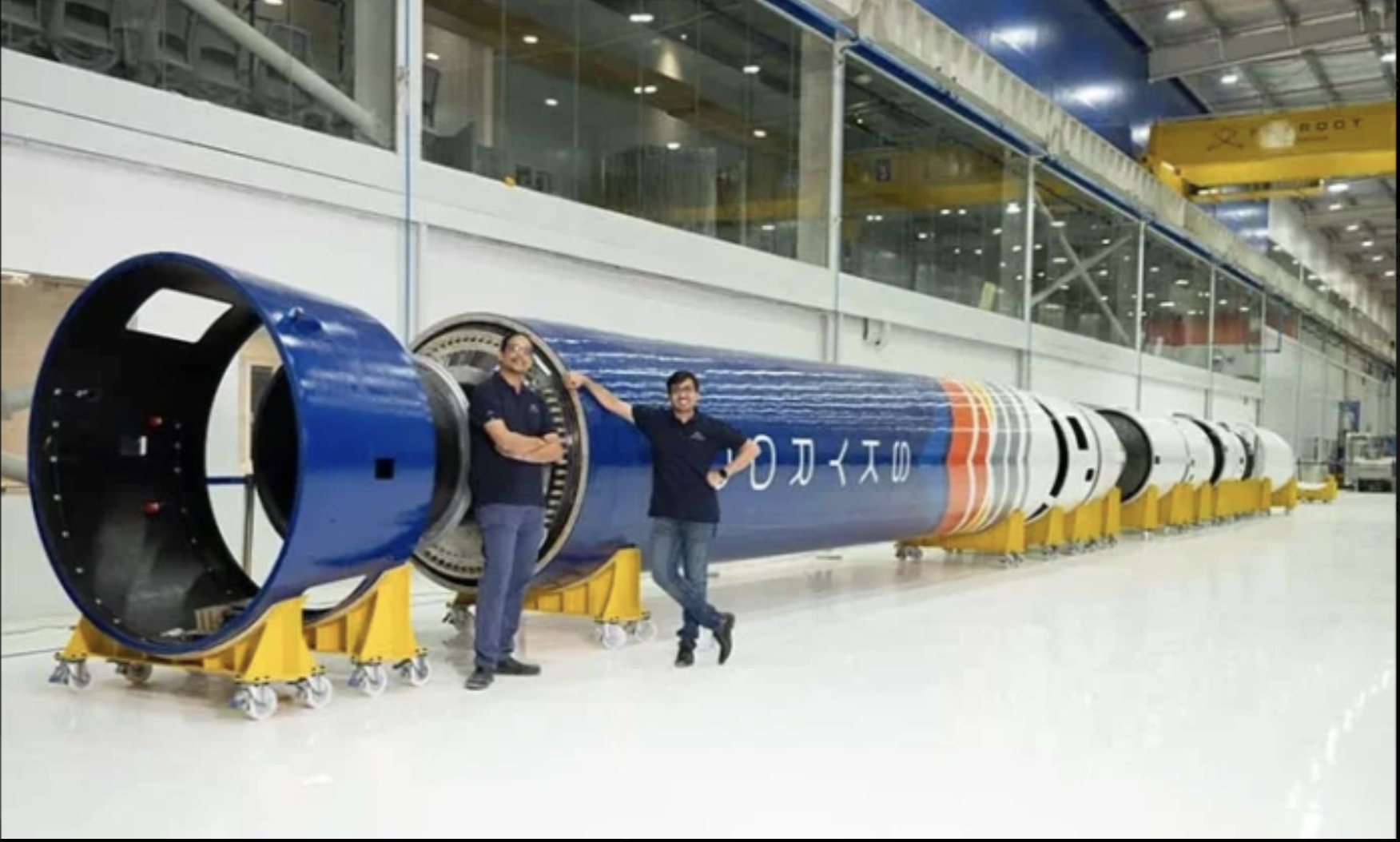
Skyroot Aerospace founders Pawan Kumar Chandana (left) and Naga Bharath Daka (right) with the Vikram-1 rocket at the Infinity Campus facility in Hyderabad. The rocket features the distinctive blue payload fairing and SKYROOT branding.
Vikram-1 Maiden Launch: Targeting Early 2026
The debut orbital mission of Vikram-1 is planned for early 2026 from ISRO's Satish Dhawan Space Centre in Sriharikota. Recent updates indicate ongoing integration and testing, with the rocket's stages already at the launch site and final validations in progress.
| Detail | Information |
|---|---|
| Launch Vehicle | Vikram-1 |
| Launch Window | Early 2026 |
| Launch Site | Satish Dhawan Space Centre, Sriharikota, India |
| Payload Capacity (LEO) | 480 kg @ 45° inclination |
| Payload Capacity (SSPO) | 290 kg to Sun-synchronous orbit |
| Stages | Four-stage design (solid + liquid propulsion) |
| Status | Integration and testing in progress |
A successful launch will position India among a select group of nations with private orbital capabilities, competing globally in the small-satellite market alongside vehicles like Rocket Lab's Electron. Skyroot aims for multiple launches in 2026, with advanced variants like the cryogenic-powered Vikram-II in development.
India's Private Space Market Growth
The transformation of India's space sector has been remarkable. Here's a snapshot of the industry's growth:
| Metric | Value |
|---|---|
| Active Startups | 300+ companies |
| Private Investment (2025) | ~$150 million |
| Total Private Investment | $617+ million (as of 2025) |
| Current Market Value | $9 billion |
| Projected 2033 Value | $44 billion |
The Bigger Picture: India's Private Space Revolution
Skyroot's progress exemplifies the synergies between public policy and private innovation. Companies like Agnikul Cosmos are also advancing, contributing to a competitive domestic launch market. This growth is easing ISRO's workload while helping India capture a larger slice of the $450 billion global space economy.
Key Policy Reforms
- 2020 Space Sector Liberalization: Opened the industry to private participation
- 100% FDI Allowance: Foreign direct investment permitted in certain space sectors
- IN-SPACe Creation: Independent nodal agency to facilitate private sector participation
- Streamlined Licensing: Simplified approval processes for launches and satellite operations
Leading Indian Private Space Companies
Beyond Skyroot Aerospace, several other companies are making significant strides:
- Agnikul Cosmos: Developing Agnibaan, a customizable small satellite launch vehicle
- Bellatrix Aerospace: Electric propulsion systems and satellite platforms
- Pixxel: Earth observation satellites and hyperspectral imaging
- Dhruva Space: Satellite manufacturing and ground systems
As Vikram-1 counts down to liftoff, it represents more than a rocket—it's the launchpad for India's ambitious private space future. The successful launch will mark a historic milestone, positioning India alongside nations with private orbital launch capabilities and opening new opportunities in the global small-satellite market.
Follow SpaceLaunchIndex.com for the latest updates on Vikram-1 and other milestones in the global space launch landscape.
Sources: Skyroot Aerospace updates, IN-SPACe reports, Indian Space Association, and industry news from 2025-2026.